

About
The apron is the thing.
At the end of a long shift in a professional kitchen, lifting your apron over your head and folding it away meant one thing: your time was your own again.
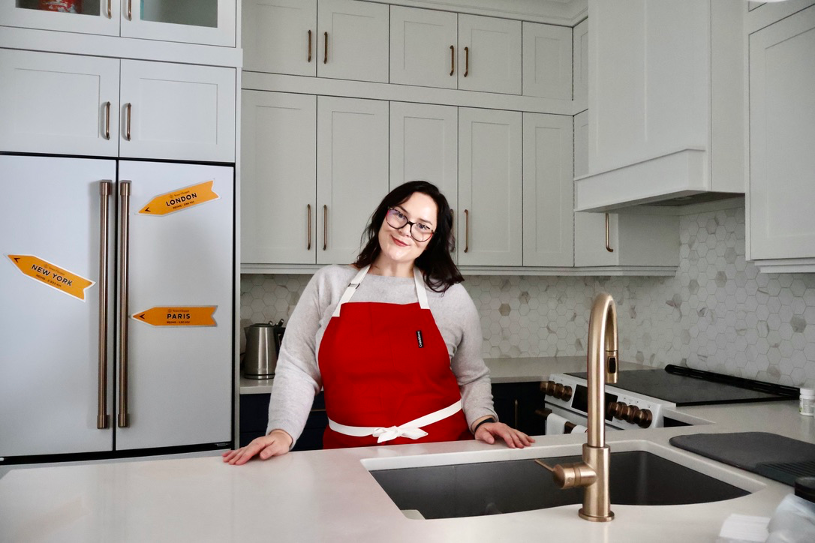
I've been folding aprons my whole life - in commercial kitchens and corporate boardrooms and now here, where both of those lives finally make sense together.
I'm Jen. Classically trained pastry chef. Chartered Professional Accountant. Collector of things other people threw away - and some things they very much did not.
I have a Birkin and a 1902 Sears catalogue. I contain multitudes.
For almost two decades I worked in finance - leading teams, building forecasts and sitting in boardrooms where nobody talked about bread. But the part of my brain that learned to measure a loaf by feel, that couldn't walk past an antique market without stopping, that has two full cupboards of tea and a yarn stash that is frankly offensive - that part never clocked out.
My mom thrifts vintage cookbooks for me because she knows exactly who I am. So do I, finally.
The Folded Apron is what happens when all of it shows up at the same table.
This is not a lifestyle blog.
It's an archive with a point of view.
I work from primary sources - early 20th-century cookbooks, mail-order catalogues and women's magazines - and I read them the way an accountant reads a financial statement: carefully, skeptically and with genuine curiosity about what the numbers actually mean.
What did it cost a woman to feed her family in 1902? What did Eaton's tell her she needed, and was she right to want it? What recipes did she make not because they were trendy, but because they worked - and do they still?
Those are the questions that live here.
I own a 1902 Sears Roebuck catalogue. An Eaton's of Canada Fall and Winter 1948-49. A Chatelaine from July 1930. A Ladies' Home Journal from 1938. A Woman's Journal from 1957 with Princess Anne on the cover.
I also have Beeton's, the Boston Cooking School, Julia Child and a growing shelf of things I cannot stop buying - or receiving, because my mom knows me well.
These aren't props. They're primary documents - the paper record of what domestic life looked like, cost and required of the women living it.
The Folded Apron reads them so you don't have to. And then we figure out what changed, what didn't and whether your great-grandmother was onto something.
Every essay here comes with what I call a Household Note - a short, calm observation about why something was done the way it was done. Not a life hack. Not a tip. Just competence, explained.
Because the women in these pages weren't guessing. They were working within systems - of time, money, labour and love - and they were very good at it.
That deserves more than nostalgia. It deserves analysis.
And occasionally, it deserves a really good cup of tea. I have options.
Pull up a chair. Leave your apron at the door - we'll fold this one together.
— Jen
Contact us
Interested in working together? Fill out some info and we will be in touch shortly. We can’t wait to hear from you!